Description
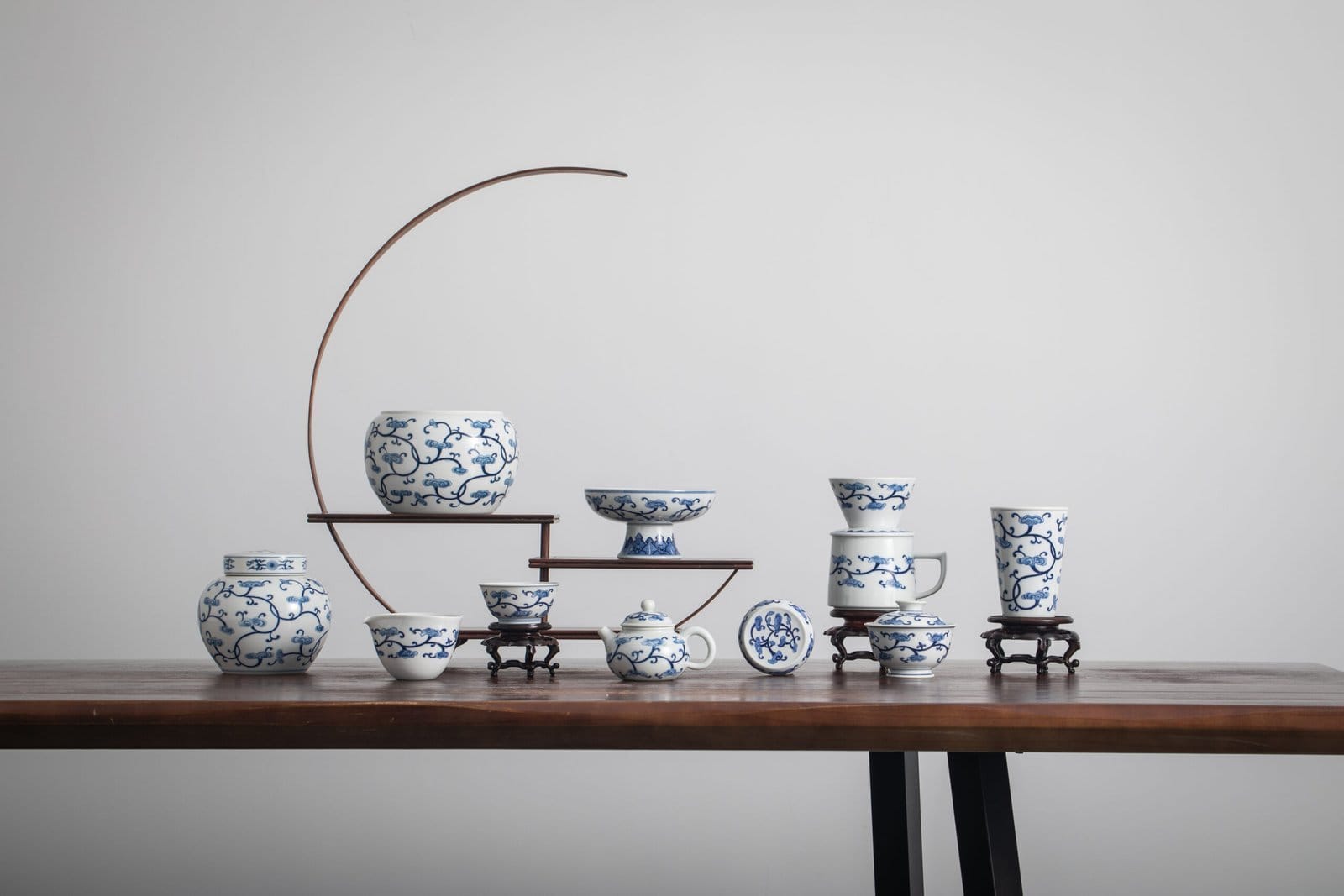
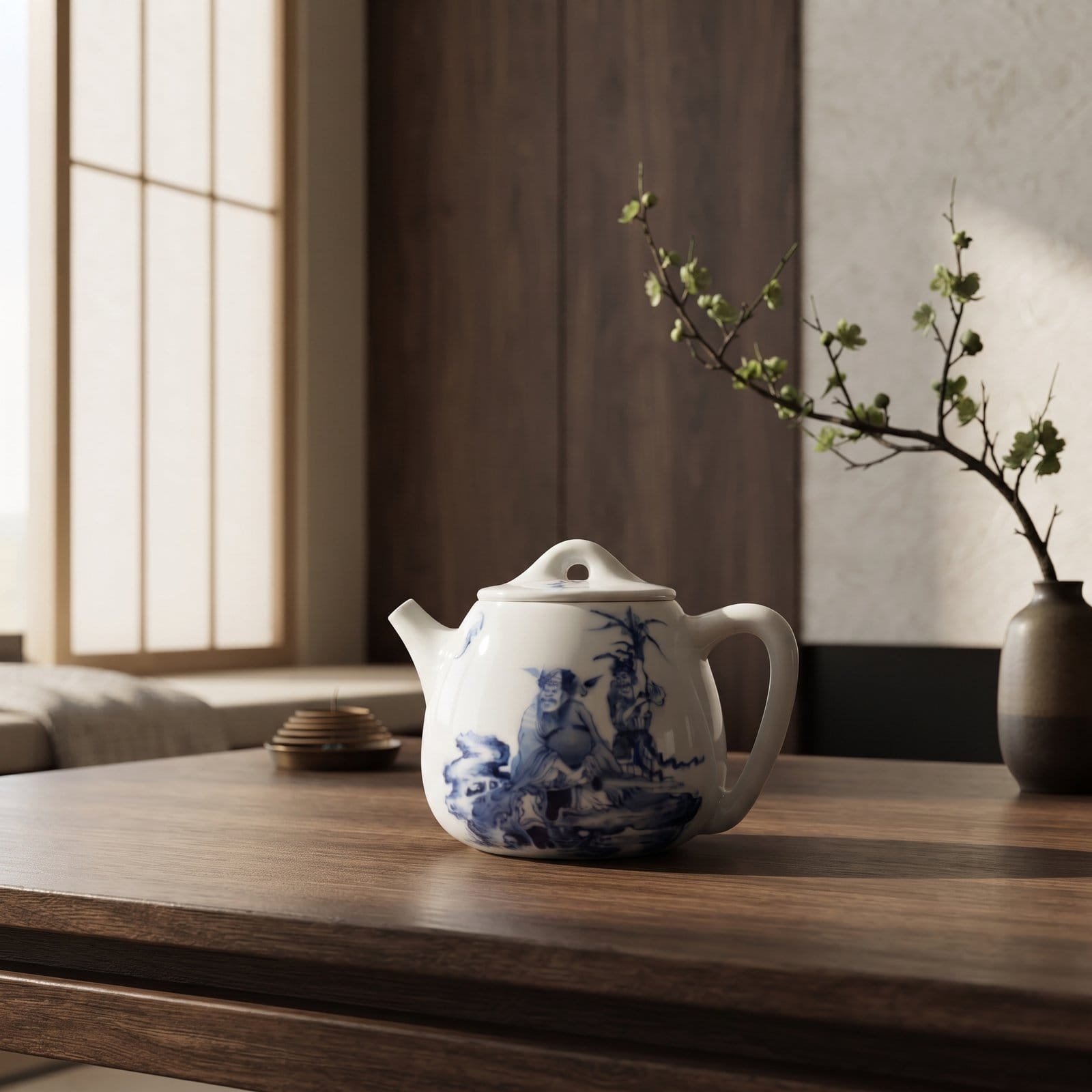
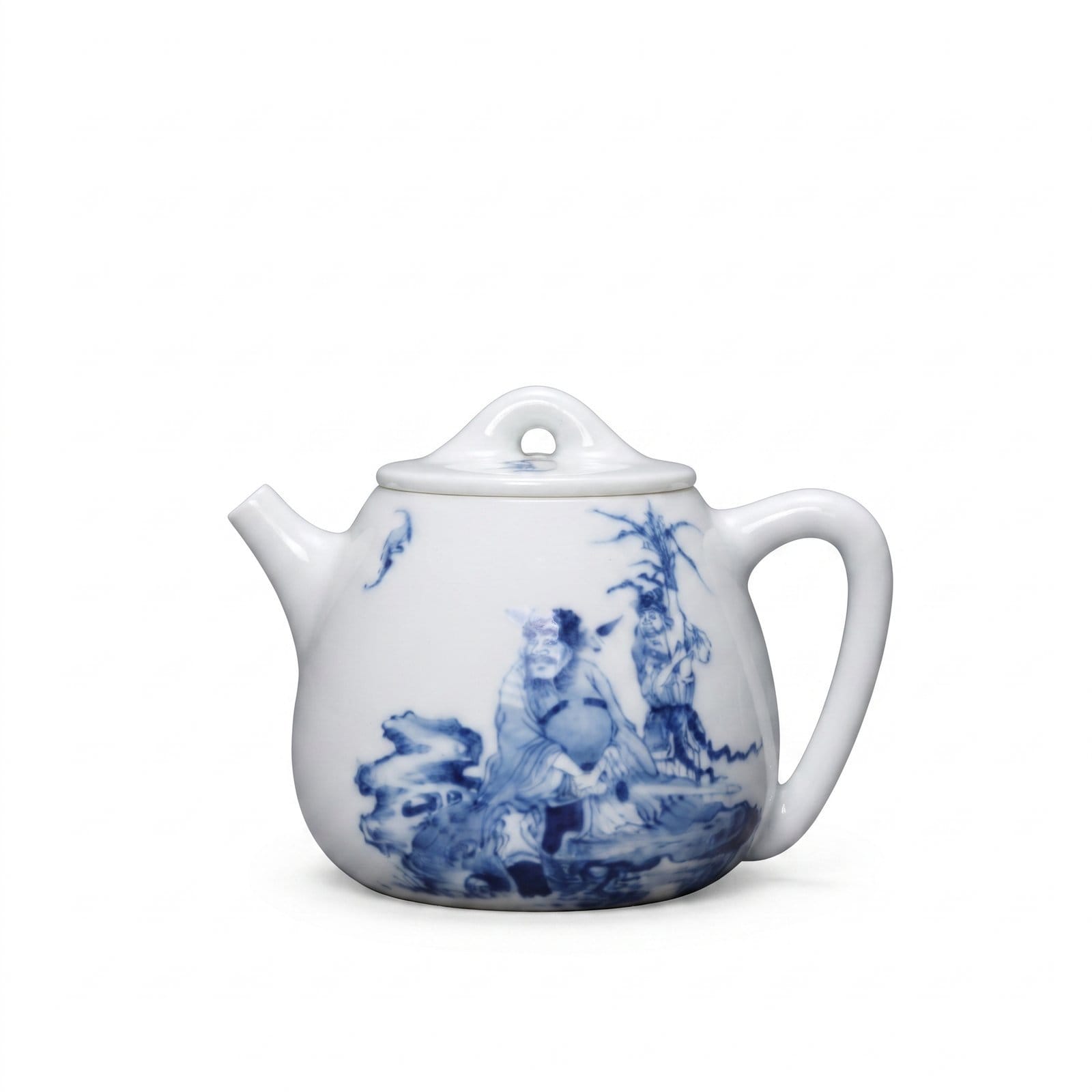
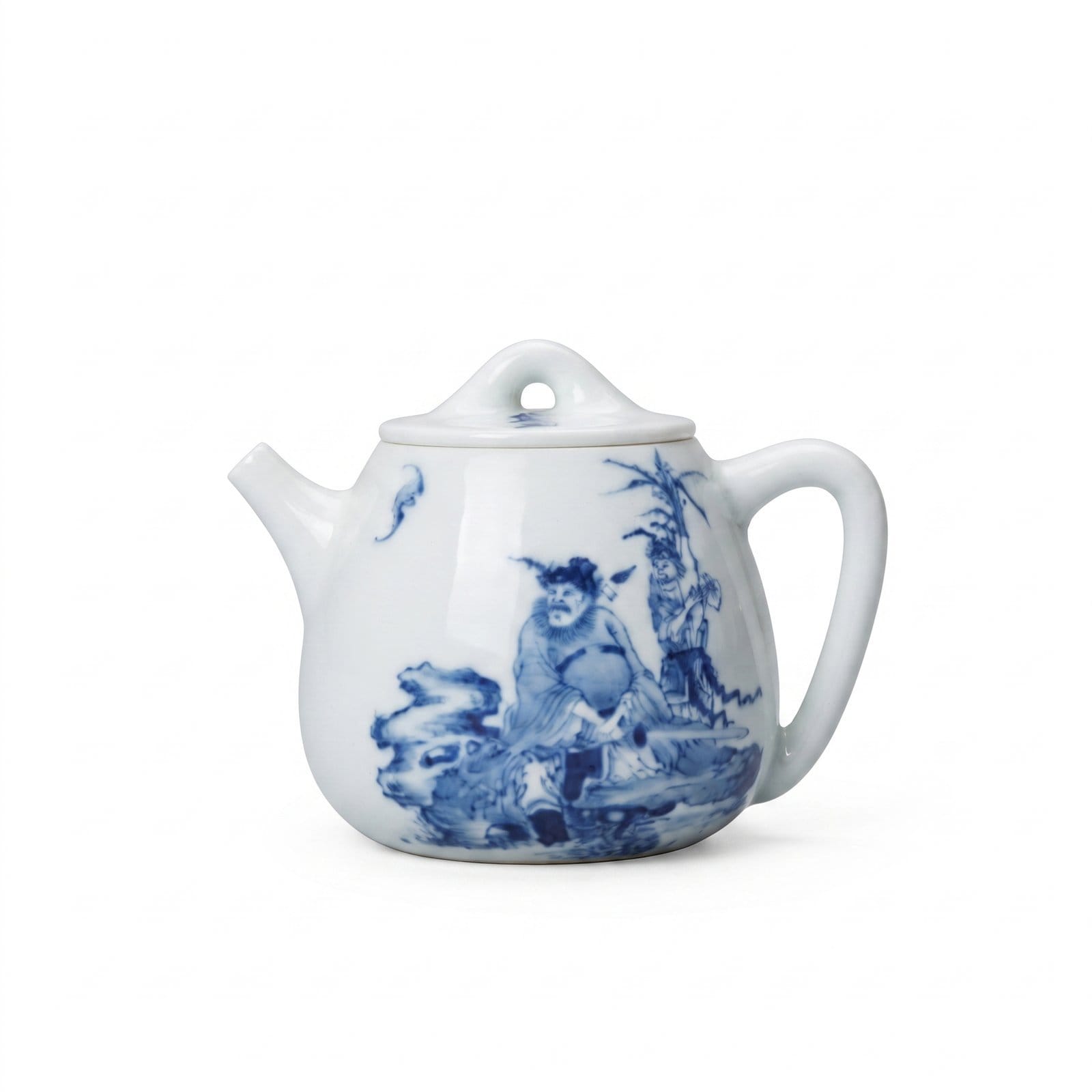
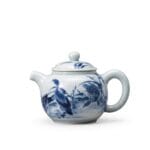
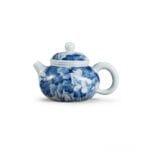
Huashan Zhuoyin Blue & White Zhong Kui Shibiao Teapot
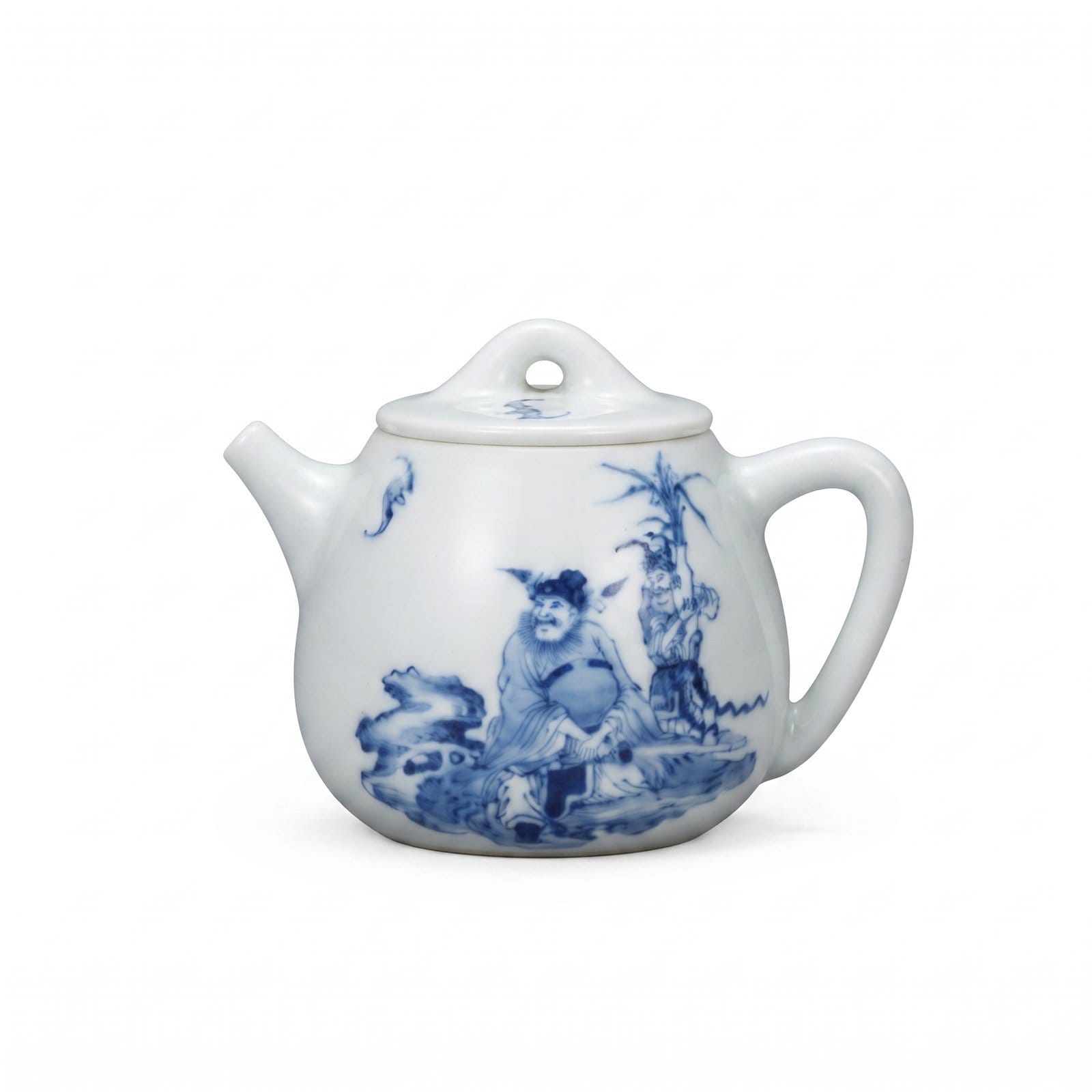
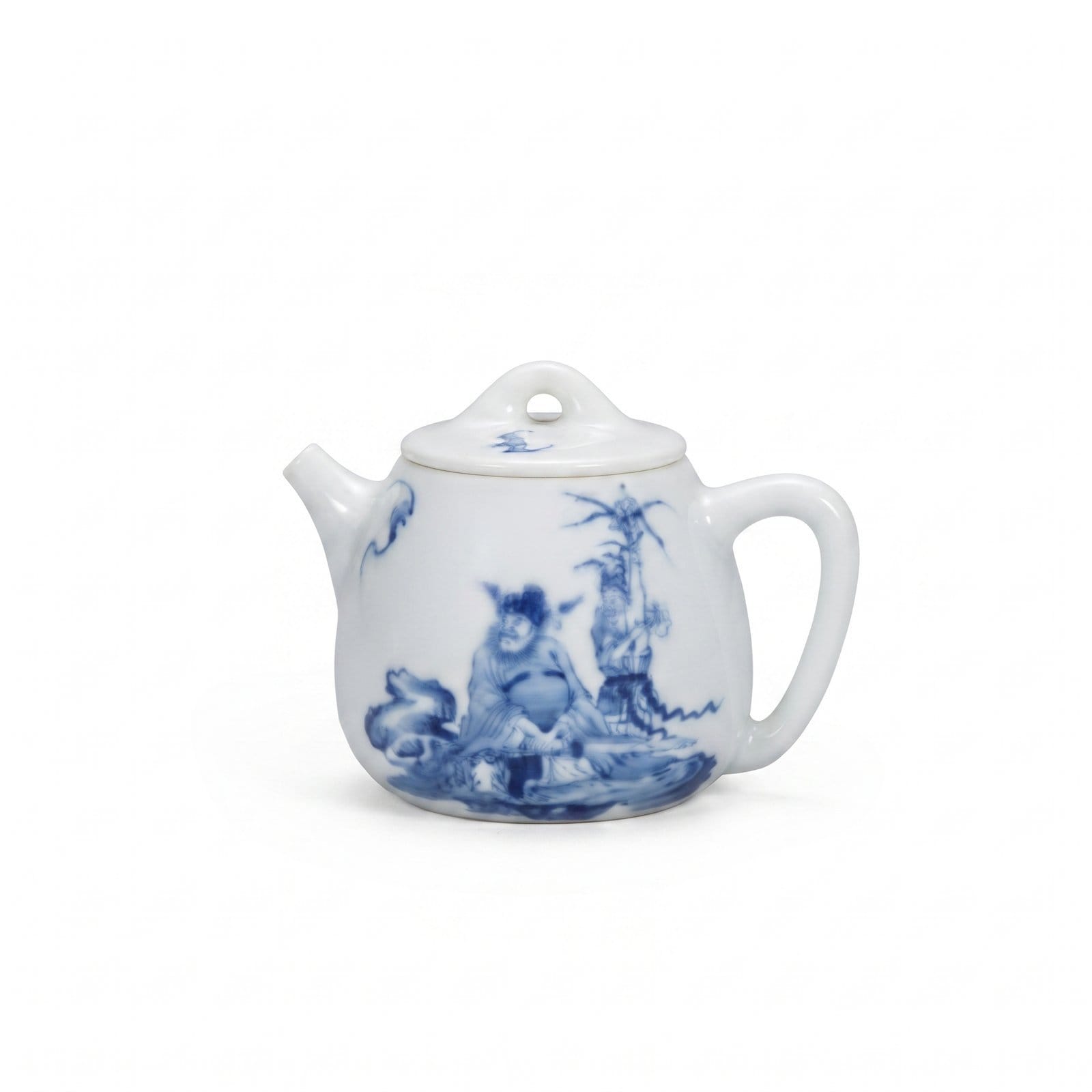
Inspired by the classic Shibiao teapot form, this piece features a restrained, balanced silhouette with a grounded body and strong yet elegant lines.
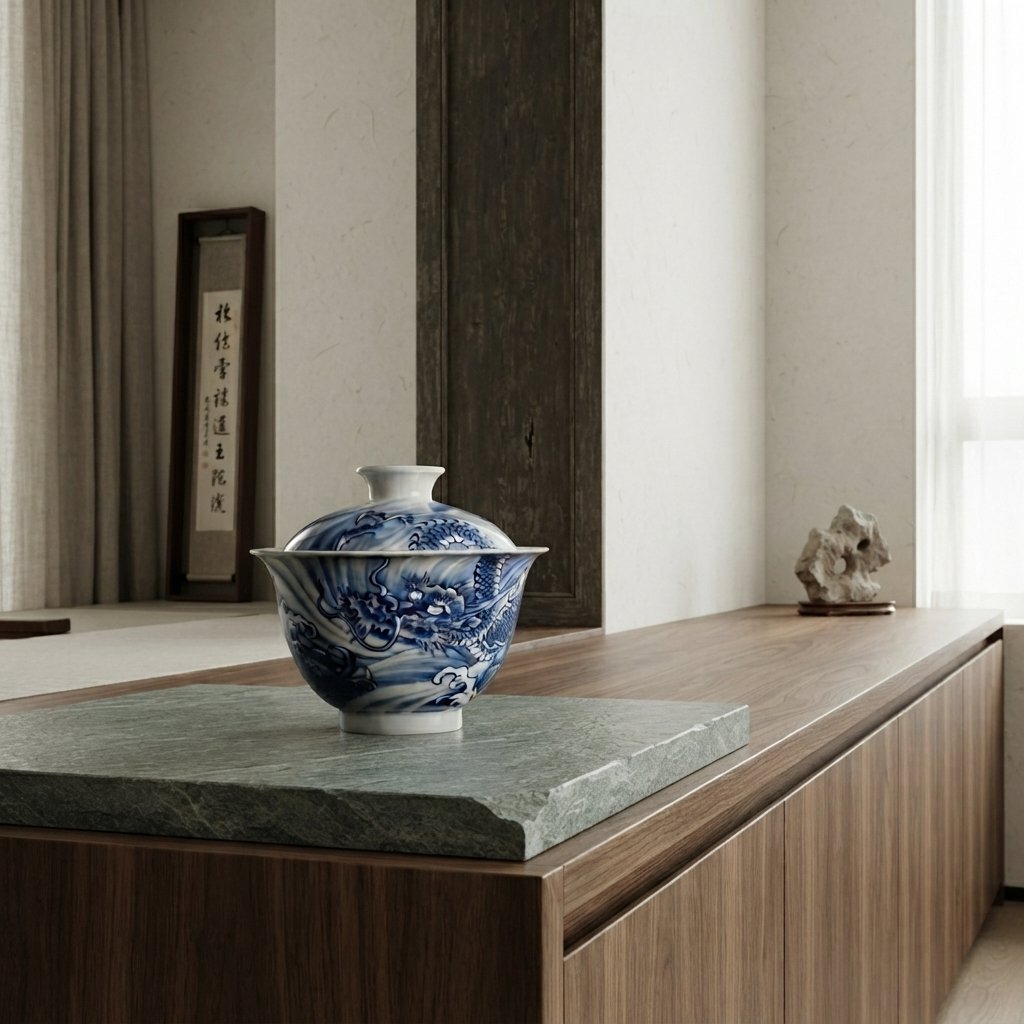
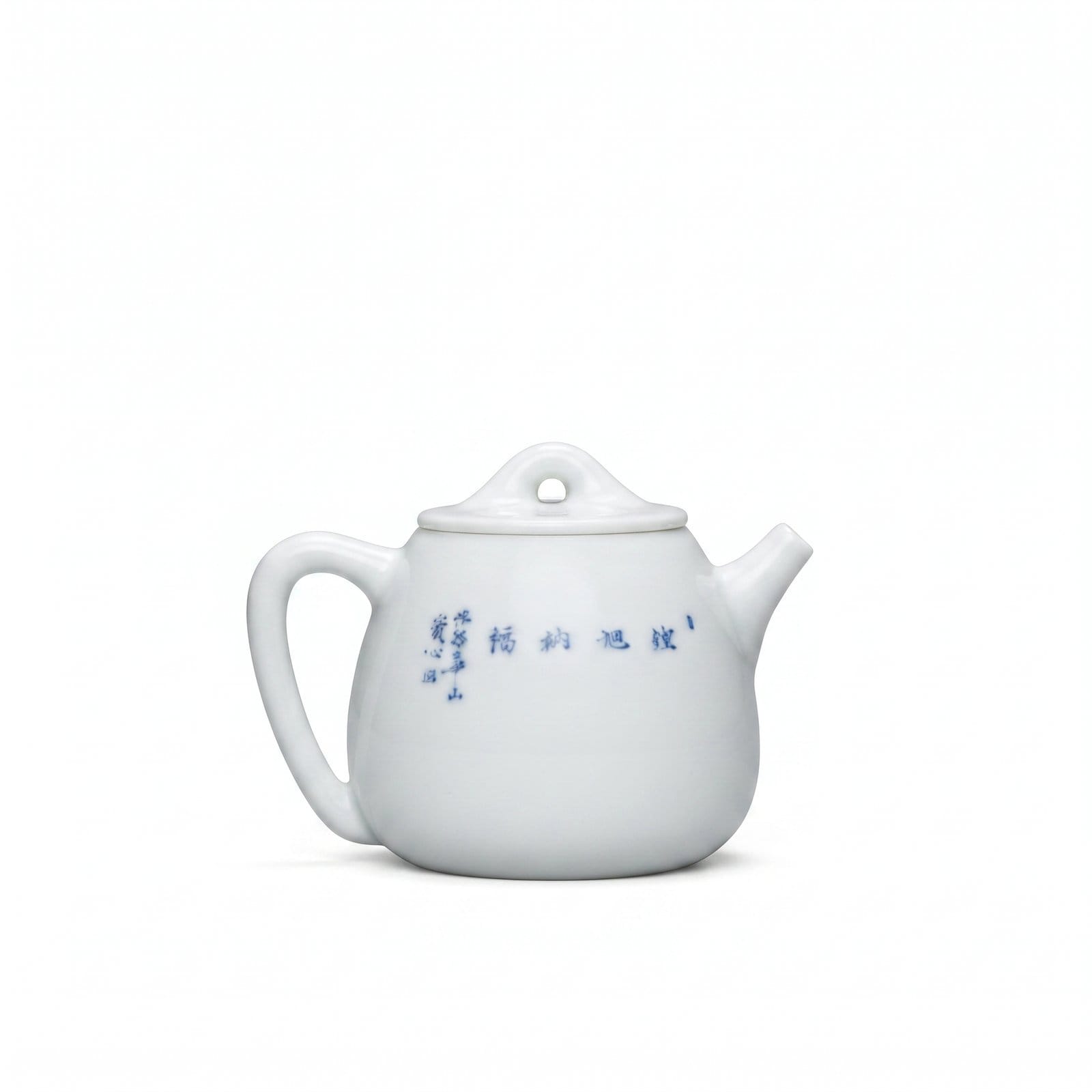
The porcelain body is hand-painted in blue and white with the scene of “Zhong Kui Welcoming Fortune.” Zhong Kui sits calmly among rocks while an attendant stands nearby holding a precious vase, accompanied by two flying bats. Delicate brushwork defines the figures and flowing robes, while layered cobalt washes create depth across the surrounding rocks. On the reverse, the hand-brushed inscription “Zhong Kui Welcoming Fortune” brings painting, calligraphy, and form together as one composition.
Beyond its painted decoration, Huashan Zhuoyin places equal emphasis on function. Careful control of the porcelain body’s higher firing shrinkage allows the spout, lid, and proportions to work together with precision, combining the distinctive character of Jingdezhen blue-and-white porcelain with a smooth, controlled pour and clean water cutoff.
Appearance & Dimensions
Compliance & Certification
Shipping Method
Returns Policy
Once a call tag is issued, Arteriors requires all products to be returned to us within 30 days.Please note, Arteriors is not responsible for fees charged by 3rd parties for services retained by clients, including, but not limited to, installation, storage, inspection, and packaging.
A Shibiao teapot, a portrait of Zhong Kui, and an Eastern expression of welcoming fortune.
The Shibiao is a classic Chinese teapot form often associated with the cultural idea of taking only what one needs from abundance. Its restrained silhouette and grounded proportions embody a sense of simplicity, moderation, and quiet refinement.
For this piece, Huashan brings the traditional theme of “Zhong Kui Welcoming Fortune” onto the Shibiao form. Rather than emphasizing Zhong Kui’s fierce and imposing character, the painting presents him seated calmly among rocks. An attendant holds a precious vase nearby, while bats move through the composition.
Through delicate blue-and-white brushwork, Zhong Kui takes on a quieter, more scholarly presence. Painting appears on one side, calligraphy on the other, allowing imagery and written expression to complete the story together.
Here, traditional auspicious symbolism becomes more than decoration—it becomes part of an object made to be held, poured, and experienced through the everyday ritual of tea.